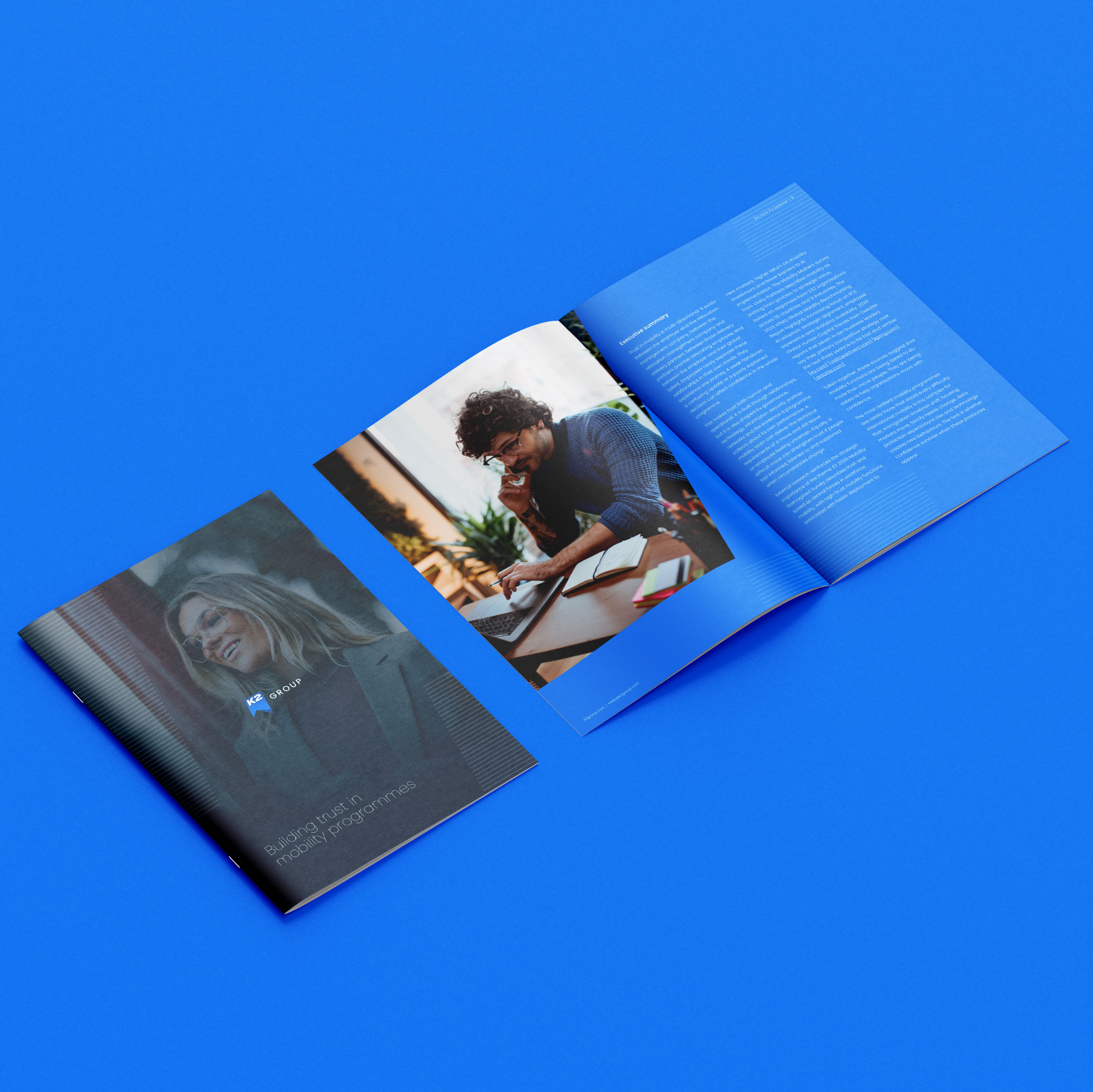
Building trust in mobility programmes
K2’s Frontline Knowledge Series – August 2026
For senior leaders, VIPs and business-critical talent, an international move can involve intense pressure. The practical requirements may be complex, but the personal expectations are often just as important. Families need confidence. Assistants and internal stakeholders need clarity. Individuals need to feel that sensitive details, time constraints and personal preferences are being handled with care.
This makes the central question of K2’s latest Frontline especially relevant: why does trust strengthen in some mobility programmes and weaken in others?
The August edition explores trust as a defining feature of modern mobility. It looks beyond policy, operations and technology to examine the conditions that help people feel informed, protected and supported throughout the relocation process.
In a bespoke relocation environment, trust can be affected by small details. A handover that feels impersonal, an update that lacks context or a decision that is not clearly explained can weaken confidence. Conversely, a complex move can reinforce trust when people feel listened to, understood and guided through uncertainty.
For senior leaders, VIPs and business-critical talent, an international move can involve intense pressure. The practical requirements may be complex, but the personal expectations are often just as important. Families need confidence. Assistants and internal stakeholders need clarity. Individuals need to feel that sensitive details, time constraints and personal preferences are being handled with care.
This makes the central question of K2’s latest Frontline especially relevant: why does trust strengthen in some mobility programmes and weaken in others?
The August edition explores trust as a defining feature of modern mobility. It looks beyond policy, operations and technology to examine the conditions that help people feel informed, protected and supported throughout the relocation process.
In a bespoke relocation environment, trust can be affected by small details. A handover that feels impersonal, an update that lacks context or a decision that is not clearly explained can weaken confidence. Conversely, a complex move can reinforce trust when people feel listened to, understood and guided through uncertainty.


The reasons for FastTrack
Rob McFarland, Group CCO, discusses how FastTrack by K2 streamlines mobility transition, faster, offering companies a more efficient way to manage their program. He explains that the service was developed to address the growing need for agility in business operations, enabling organisations to quickly adapt to changing market demands.
The paper also considers how trust moves through the wider mobility ecosystem. Employers, mobility teams, relocation management companies, immigration advisers, destination partners and other specialists all influence the experience. For the individual relocating, these touchpoints are rarely separate. They form one impression of whether the programme is working for them. Technology and visibility also play an important role. More information can support confidence, but only when it helps people understand what is happening, what may happen next and where judgement is being applied.
As organisations continue to move senior talent across borders, trust becomes more than a service expectation. It becomes part of how mobility protects focus, confidence and reputation.
To explore our findings, insights and recommendations in full, download Building trust in mobility programmes, K2’s Frontline thinking paper for August 2026.