



Innovation isn’t scale. It’s precision where it matters
For those who expect more, innovation isn’t just about systems. It’s felt in experience, judgement, and detail.
This is where the usual idea of innovation begins to fade. Platforms and products can support delivery, but they cannot anticipate nuance, read context, or adapt in real time to personal expectations. For C-suite leaders, board members, and high-profile individuals, innovation isn’t about adding. It’s how seamlessly everything functions, often without drawing attention.
Innovation isn’t visible. It’s experienced.
In many areas of mobility, innovation can be demonstrated through a system, a process, or a piece of technology. But at the highest level, the opposite is often true. The most effective outcomes are those that feel effortless, where complexity is absorbed rather than exposed.
This demands a different kind of thinking, one that prioritises discretion, timing, and awareness over visibility. Luxury brands like The Ritz-Carlton have long operated on this principle, creating experiences that feel intuitive rather than dictated. In this context, innovation isn’t something to be shown; it’s something to be understood.
Precision over process:
Consistency has its place, but it rarely achieves excellence at an individual level. No two senior stakeholders will share the same expectations, preferences, or pressures. Treating them within a standardised framework risks missing what truly matters.
Innovation here is about precision - taking the time to understand the individual, anticipating needs before they are expressed, and shaping delivery accordingly. It’s not about removing structure but knowing when to move beyond it with confidence and care.
Anticipation is the real differentiator:
The distinction between good and exceptional mobility often rests in anticipation. Recognising what will matter before it becomes visible. Addressing potential pressures before they surface.
This cannot be automated. It is built through experience, judgement, and a deep understanding of both the individual and their environment. As explored by McKinsey & Company, high-performing organisations differentiate not just through execution, but through how well they anticipate and respond. In high-touch service models, it is anticipation, not reaction, that defines quality.
This is where the usual idea of innovation begins to fade. Platforms and products can support delivery, but they cannot anticipate nuance, read context, or adapt in real time to personal expectations. For C-suite leaders, board members, and high-profile individuals, innovation isn’t about adding. It’s how seamlessly everything functions, often without drawing attention.
Innovation isn’t visible. It’s experienced.
In many areas of mobility, innovation can be demonstrated through a system, a process, or a piece of technology. But at the highest level, the opposite is often true. The most effective outcomes are those that feel effortless, where complexity is absorbed rather than exposed.
This demands a different kind of thinking, one that prioritises discretion, timing, and awareness over visibility. Luxury brands like The Ritz-Carlton have long operated on this principle, creating experiences that feel intuitive rather than dictated. In this context, innovation isn’t something to be shown; it’s something to be understood.
Precision over process:
Consistency has its place, but it rarely achieves excellence at an individual level. No two senior stakeholders will share the same expectations, preferences, or pressures. Treating them within a standardised framework risks missing what truly matters.
Innovation here is about precision - taking the time to understand the individual, anticipating needs before they are expressed, and shaping delivery accordingly. It’s not about removing structure but knowing when to move beyond it with confidence and care.
Anticipation is the real differentiator:
The distinction between good and exceptional mobility often rests in anticipation. Recognising what will matter before it becomes visible. Addressing potential pressures before they surface.
This cannot be automated. It is built through experience, judgement, and a deep understanding of both the individual and their environment. As explored by McKinsey & Company, high-performing organisations differentiate not just through execution, but through how well they anticipate and respond. In high-touch service models, it is anticipation, not reaction, that defines quality.


The reasons for FastTrack
Rob McFarland, Group CCO, discusses how FastTrack by K2 streamlines mobility transition, faster, offering companies a more efficient way to manage their program. He explains that the service was developed to address the growing need for agility in business operations, enabling organisations to quickly adapt to changing market demands.
Innovation is personal:
At this level, mobility becomes inherently personal. It reflects not only the movement itself but also the responsibilities, expectations, and visibility of the individual involved. Innovation isn’t about introducing something new; it’s about ensuring everything works as it should, often without drawing notice.
This calls for a careful approach - one that is adaptable, responsive, and rooted in understanding. Innovation in this context isn’t about scale; it’s about how well it fits.
Where innovation is felt, not shown:
Innovation at this level isn’t something that can be packaged or showcased. It’s delivered through experience, judgement, and precision. The question isn’t what innovation looks like but whether it is being felt where it matters most.
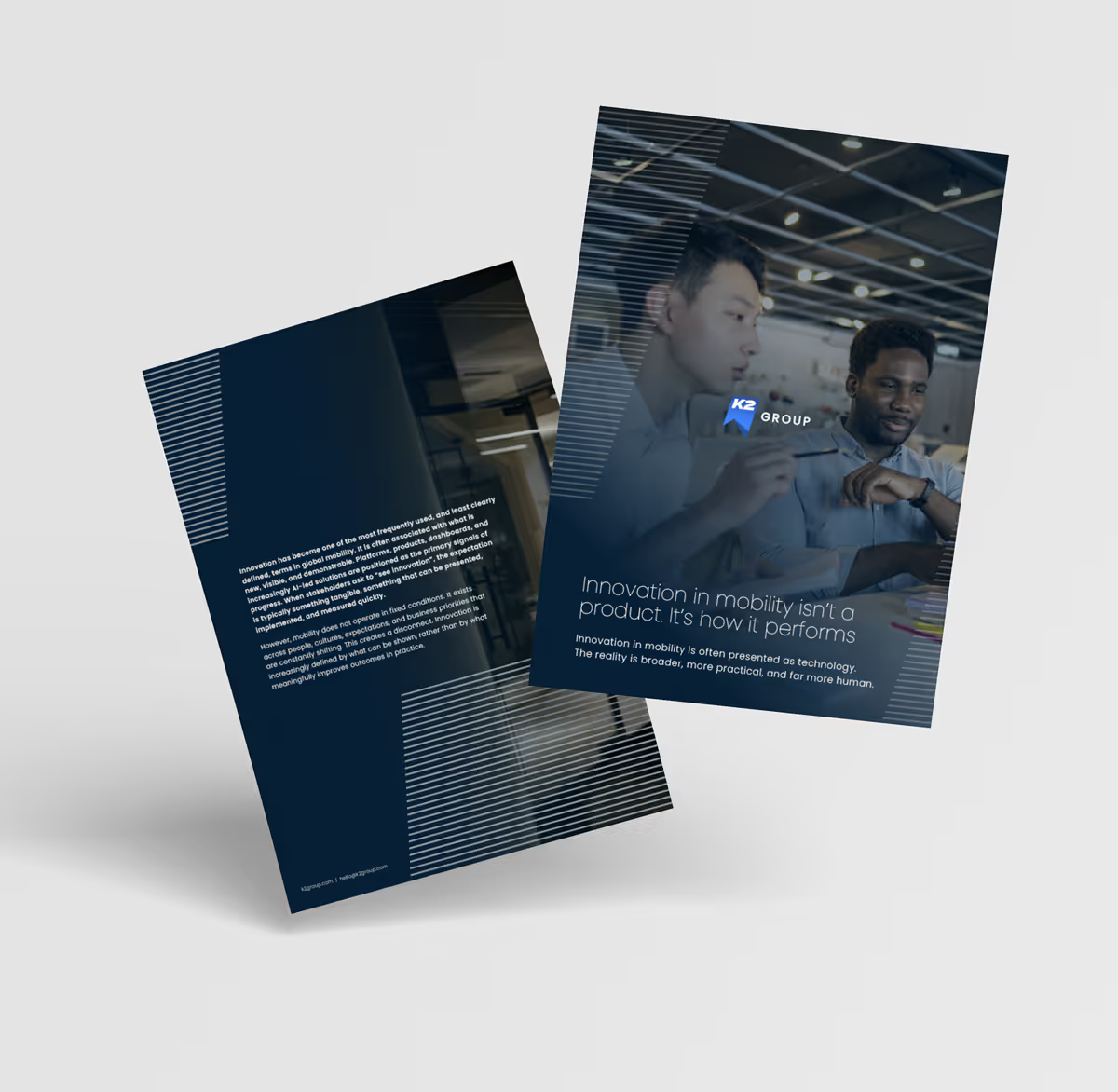
To explore this further, access our full research paper via K2 Group. It offers a broader perspective on how innovation is implemented across mobility, including its most complex and sensitive aspects.
If you prefer a more discreet conversation, connect with your K2 Bespoke team. You can also share your perspective on our LinkedIn article or stay informed through our K2 Group Collective newsletter.
Download the PDF


Frequently asked questions
Straight answers to the questions we hear most about private relocation.
What does innovation mean in high-end relocation?
+
In high-end relocation, innovation is about precision rather than scale. It is less about introducing new systems or technology and more about how precisely a service responds to the individual. The most effective outcomes feel effortless, where complexity is absorbed rather than exposed.
Why does anticipation matter in premium relocation?
+
Anticipation is often what separates good relocation from exceptional relocation. It means recognising what will matter before it becomes visible and addressing potential pressures before they surface. This cannot be automated; it is built through experience, judgement and a deep understanding of the individual and their environment.
Why is a standardised approach not enough for senior relocation?
+
No two senior stakeholders share the same expectations, preferences or pressures. Treating them within a standardised framework risks missing what truly matters to each individual. Precision means taking the time to understand the person, anticipating needs before they are expressed and shaping delivery accordingly.

